What is draw length in archery? Draw length is the distance you pull back the bowstring before releasing the arrow. Finding the right draw length is crucial for accuracy, comfort, and safety. This guide will help you measure your draw length and understand its importance in archery.
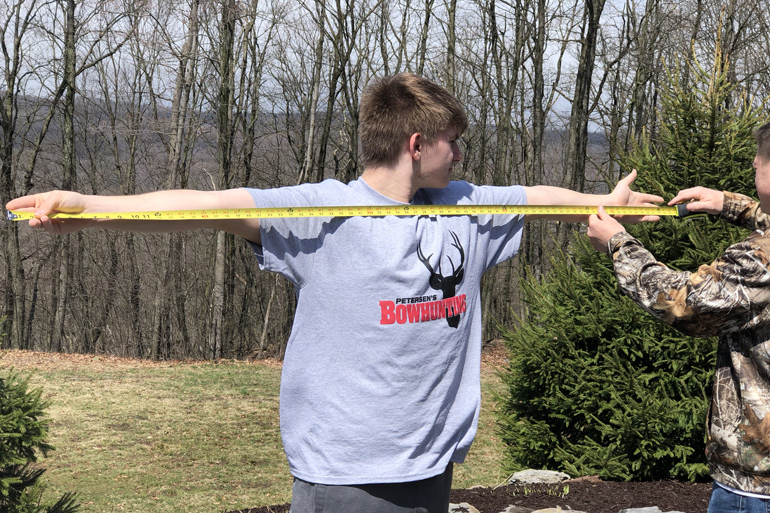
Image Source: content.osgnetworks.tv
Why is Draw Length Important?
Using the wrong draw length can cause several problems:
- Inaccuracy: If the draw length is too long or too short, it can affect your aiming and consistency.
- Discomfort: An incorrect draw length can lead to strain in your shoulders, back, and neck.
- Safety Issues: A draw length that’s too long can cause the string to slap your forearm, while a draw length that’s too short can lead to poor arrow flight.
- Reduced Power: An improper draw length can prevent you from reaching your bow’s full potential, reducing arrow speed and impact.
How to Measure Draw Length at Home
There are a few different methods to measure your draw length at home. Here’s a simple and effective way:
The Wingspan Method
This is the most common and easiest method for draw length calculation.
- Measure your wingspan: Stand with your arms extended straight out to the sides, parallel to the ground. Have someone measure the distance from the tip of one middle finger to the tip of the other middle finger. Measure in inches.
-
Calculate your draw length: Divide your wingspan (in inches) by 2.5. The resulting number is your approximate draw length.
- Formula: Draw Length = Wingspan (inches) / 2.5
Using a Measuring Arrow
You can also use a measuring arrow to determine your draw length. This method requires a bow, but it can provide a more accurate measurement.
- Obtain a measuring arrow: These arrows have markings along the shaft, usually in one-inch increments.
- Nock the arrow: Place the measuring arrow on your bowstring.
- Draw the bow: Draw the bow back to what feels like your anchor point (the consistent point on your face where you hold the string).
- Have someone read the measurement: While you’re at full draw, have someone read the marking on the arrow shaft at the point where it aligns with the front of the bow riser (handle).
- Repeat: Repeat this process a few times to ensure accuracy.
The Arm Length Method
- Measure your arm length: Stand straight and have someone measure from the center of your chest to the tip of your wrist bone. This is your arm length.
- Convert to Draw Length: Since draw length is measured to the deepest part of the grip, you will subtract roughly 1 to 1.75 inches from your arm length measurement. The arm length method is not a precise measurement.
Archery Draw Length Chart
While the wingspan method provides a good starting point, an archery draw length chart can offer a more detailed reference. Here’s a sample chart:
| Wingspan (Inches) | Approximate Draw Length (Inches) |
|---|---|
| 60 | 24 |
| 62 | 24.8 |
| 64 | 25.6 |
| 66 | 26.4 |
| 68 | 27.2 |
| 70 | 28 |
| 72 | 28.8 |
| 74 | 29.6 |
| 76 | 30.4 |
| 78 | 31.2 |
| 80 | 32 |
Note: This chart is for reference only. It is still essential to have a professional assess your draw length for the best fit.
Draw Length for Compound Bow vs. Recurve Bow
The principle of draw length applies to both compound and recurve bows, but there are a few key differences:
- Compound Bows: Compound bows have a “let-off,” which means the draw weight decreases significantly at full draw. This allows you to hold the bow at full draw for a longer period with less effort. The draw length on a compound bow is more critical because it affects the performance of the cams and the amount of let-off.
- Recurve Bows: Recurve bows do not have let-off, so the draw weight increases steadily as you pull back the string. While draw length is still important for recurve bows, there is more room for slight variation since there are no cams to synchronize.
Draw Length for Compound Bows
When setting up a draw length for compound bow, it’s critical to ensure it is precise, as a few factors will change if the bow is incorrectly set up.
- Cam Timing: Compound bows have cam timing that helps determine the speed, efficiency, and power of the bow. It also affects the let-off and how consistently the bow draws. Draw length is a core element of cam timing. If it is off, the bow will not shoot at its optimal performance and feel.
- String Slap: If the draw length is too long, it can cause the string to slap your forearm when you release the arrow. This is painful and can affect your accuracy.
- Difficulty Drawing: A draw length that’s too short can make it difficult to reach your anchor point and maintain a consistent shooting form.
Determining Arrow Length
After finding your draw length, you need to determine arrow length. Arrow length is usually slightly longer than your draw length for safety reasons.
- Add 1-2 inches to your draw length: This extra length ensures the arrow point extends past the arrow rest when you’re at full draw, preventing the arrow from falling off the rest or damaging the bow.
- Consult an arrow chart: Arrow manufacturers provide charts that recommend arrow spine (stiffness) based on your draw length and bow poundage. Selecting the correct arrow spine is essential for accuracy and safety.
Archery Form and Draw Length
Archery form and draw length are closely related. A proper draw length allows you to maintain a consistent and efficient shooting form.
- Anchor Point: A consistent anchor point is crucial for accuracy. Your draw length should allow you to comfortably reach and maintain your anchor point on your face.
- Shoulder Alignment: The correct draw length promotes proper shoulder alignment, preventing strain and injury. Your shoulders should be relaxed and in line with the target.
- Back Tension: A good draw length encourages the use of back tension, which is essential for a smooth and controlled release.
Adjusting Draw Length
Most compound bows have adjustable draw length modules. These modules allow you to fine-tune your draw length in small increments (usually 0.5-inch or 1-inch adjustments). If your draw length needs a significant adjustment, you may need to change the bow’s cams or strings.
Recurve bows do not have adjustable modules, so changing the draw length usually requires a different bow.
AMO Draw Length Standard
The AMO draw length standard is an industry standard for measuring draw length. It’s important to understand this standard when purchasing a bow or arrows.
- AMO Draw Length: The AMO (Archery Manufacturers Organization) draw length is the distance from the string at full draw to the deepest part of the bow’s grip, plus 1.75 inches.
- Why 1.75 Inches? The 1.75-inch addition accounts for the average distance from the deepest part of the grip to the pivot point of the bow.
Draw Length for Beginners
For draw length for beginners, starting with an accurate measurement is important. It’s a good idea to visit an archery shop for a professional fitting.
- Professional Assistance: An experienced archery technician can accurately measure your draw length and help you choose the right bow and arrows.
- Start with a Lower Draw Weight: When starting out, it’s best to use a lower draw weight so you can focus on developing proper form. As you get stronger, you can increase the draw weight.
- Focus on Form: Don’t worry about shooting perfect scores right away. Focus on developing a consistent and repeatable shooting form.
Fathoming Draw Length
- Experimentation: Don’t be afraid to experiment with different draw lengths to find what feels most comfortable and allows you to shoot accurately.
- Record Keeping: Keep track of your draw length, arrow length, and bow poundage. This information will be helpful when you need to replace your equipment or make adjustments.
Conclusion
Finding the right draw length is essential for archery success. By following the steps outlined in this guide, you can measure your draw length, choose the right equipment, and develop a consistent shooting form. Remember to consult with an archery professional for personalized advice and guidance.
Frequently Asked Questions (FAQ)
Q: What is draw weight?
A: Draw weight is the amount of force (measured in pounds) required to pull the bowstring to your full draw length.
Q: Can I change my draw length on my own?
A: Some compound bows have adjustable draw length modules that you can adjust yourself. However, if you need to make a significant adjustment or if you’re not comfortable working on your bow, it’s best to consult a professional.
Q: Who can help me find the right draw length?
A: An experienced archery technician at a local archery shop can accurately measure your draw length and help you choose the right equipment.
Think of it this way: your draw length dictates how far you pull the string back, while your arrow length is a smidge longer. This extra bit is crucial, as it means the arrow’s tip will peek out just beyond your arrow rest when you’re fully drawn, ready to fly true.
Q: What happens if my draw length is too long?
A: A draw length that’s too long can cause the string to slap your forearm, lead to poor accuracy, and potentially cause injury.
Q: What happens if my draw length is too short?
A: A draw length that’s too short can make it difficult to reach your anchor point, reduce arrow speed, and affect your accuracy.
Q: How often should I check my draw length?
A: You should check your draw length periodically, especially if you experience changes in your shooting form or physical condition.

Hi, I’m Robert Contreras, a passionate archery instructor based in the USA. With years of experience under my belt, I’ve dedicated my life to mastering the art of archery and sharing its intricacies with enthusiasts of all levels. Through my website, 10Bows.com, I invite you to explore a treasure trove of tips, techniques, and personal insights that reflect my journey in the world of archery. Whether you’re picking up a bow for the first time or refining your skills, I’m here to help guide you toward precision, focus, and a deeper appreciation for this timeless sport.