How do you score in archery? Archery scoring involves shooting arrows at a target and assigning points based on where the arrows land. This guide walks you through the archery scoring system, archery scoring rules, and archery scoring methods for beginners. You’ll learn about different target faces, point values, and how to calculate your score. Let’s get started!
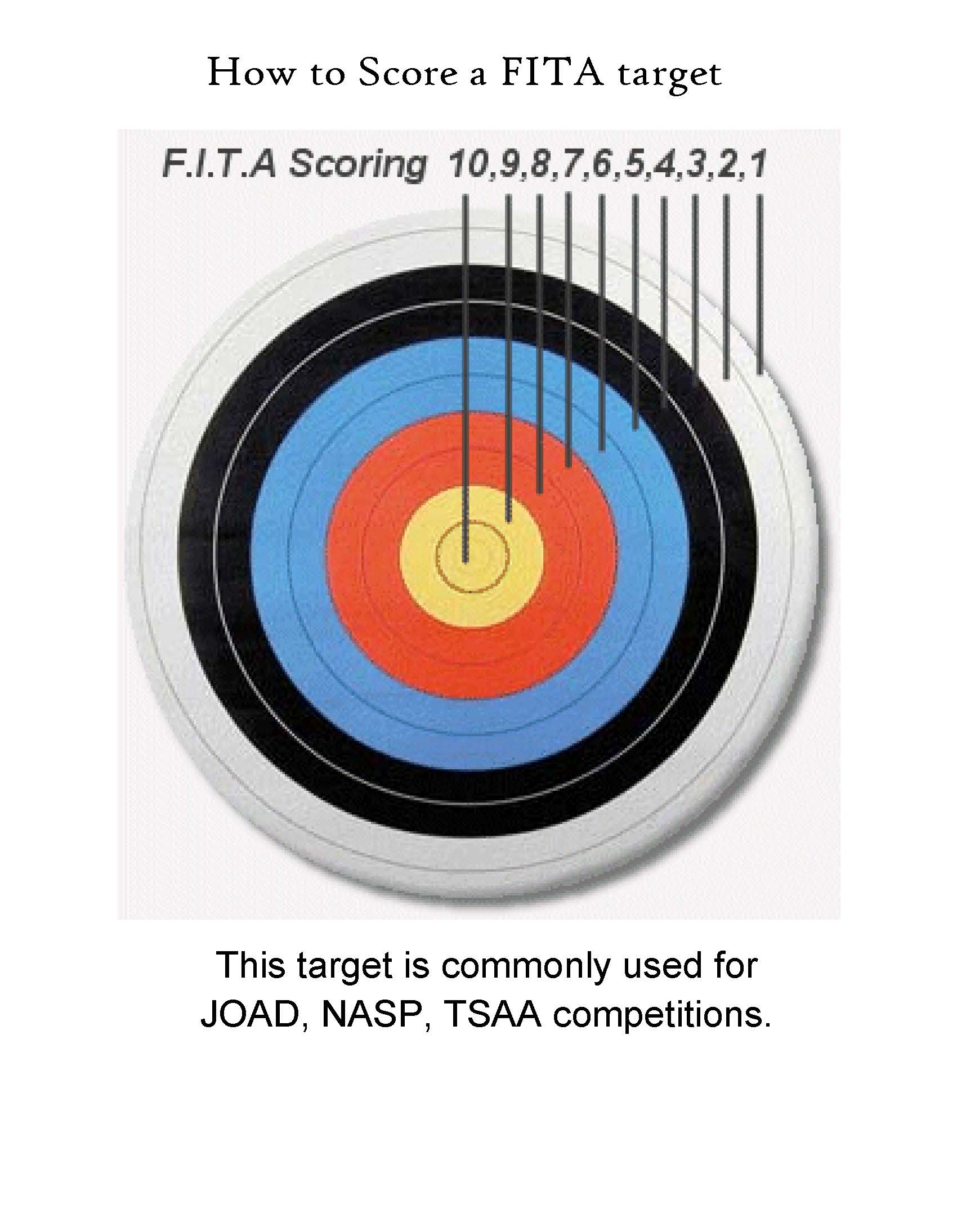
Image Source: texasarchery.info
Deciphering Archery Scoring: A Comprehensive Overview
Archery scoring might seem tricky at first, but it’s actually quite straightforward. The goal is simple: hit the target as close to the center as possible. Each ring on the target has a point value, with the center ring awarding the most points. Knowing the specific rules and archery point values for each target face is vital for accurate scoring.
Archery Scoring Basics
The core of archery scoring lies in understanding the target face. Each ring has a different color and a corresponding point value. The closer you get to the bullseye, the higher your score. In some cases, you may have different scoring zones, depending on the competition or archery type.
Why Accurate Scoring Matters
Accurate archery scoring is important for several reasons:
- Fair Competition: It ensures everyone is judged by the same standard.
- Progress Tracking: You can monitor your improvement over time.
- Rule Adherence: Following archery scoring rules is crucial for any official tournament or archery club.
- Self-Assessment: Scoring accurately helps you pinpoint areas needing practice.
Exploring Different Archery Target Faces
Archery uses several types of target faces. Each has its own design and corresponding scoring system. Knowing the differences is important for accurate scoring.
Standard Recurve and Compound Target Face
The most common target face has ten scoring rings. Here’s what you need to know:
- Colors: Gold, Red, Blue, Black, and White.
- Point Values: 1 to 10, with the gold center being worth 10 points. Some archery scoring systems also feature an inner 10 ring, often called an “X”, which serves as a tie-breaker.
Here’s a simple archery scoring chart for this target face:
| Color | Point Value |
|---|---|
| Gold | 9-10 |
| Red | 7-8 |
| Blue | 5-6 |
| Black | 3-4 |
| White | 1-2 |
Field Archery Target Faces
Field archery targets vary in size and often feature black and white concentric rings. The archery point values can differ from standard targets. Here’s a basic rundown:
- Sizes: Vary depending on the distance.
- Scoring Zones: Typically, inner gold (5 points), outer gold (4 points), black (3 points), white (2 points), miss (0 points)
3D Archery Targets
Step into the thrilling world of 3D archery, where you’ll test your aim against realistic, life-sized foam replicas of game animals. Each target features clearly defined scoring rings, guiding your quest for precision. For newcomers to the sport, the scoring system in 3D archery offers a refreshingly straightforward entry point compared to more traditional target setups.
- Scoring Zones: Vital, Heart, Body
- Point Values: Typically 10 (Vital), 8 (Heart), 5 (Body), 0 (Miss).
Archery Scoring: The NFAA System
The National Field Archery Association (NFAA) has its own unique scoring system and target faces. This system uses different target faces for different distances and bow types.
- NFAA 5-Spot Target: Features five small target faces, each with a gold center worth 5 points and white area worth 4 points.
- NFAA Field Target: Features a black target face with a white center spot worth 5 points and black rings worth 4, 3, 2 and 1 points.
Indoor Archery Targets
Indoor archery targets are similar to standard recurve and compound target faces but are often smaller. This is due to the shorter distances used in indoor archery.
- Sizes: Typically 40cm or 60cm.
- Scoring Zones: Same as standard targets (1-10 points).
How to Calculate Your Archery Score: Step-by-Step
Calculating your score accurately is important. Here’s a step-by-step archery scoring guide to help:
- Shoot Your Arrows: Shoot all your arrows in an “end” (usually 3 or 6 arrows).
- Approach the Target: Walk to the target carefully.
- Identify Arrow Placement: Determine which scoring zone each arrow landed in.
- Call Out the Score: Clearly announce the score for each arrow before removing it from the target. This prevents disputes.
- Record the Score: Write down each arrow’s score on your score sheet.
- Remove Arrows Carefully: Pull arrows straight back, using an arrow puller if needed.
- Tally the Total: Add up the scores for all arrows in the end.
- Repeat: Continue shooting ends and recording scores until the round is complete.
- Total Round Score: Sum up all the end scores to get your total round score.
Tips for Accurate Scoring
- Use a Score Sheet: Keep a dedicated score sheet to track your progress.
- Call Scores Clearly: Announce scores loudly and clearly.
- Verify Scores: Have another archer verify your scores to minimize errors.
- Use a Spotting Scope: A spotting scope helps you see arrow placement from a distance.
- Be Honest: Accurate scoring relies on honesty. Always call the correct score, even if it’s not what you hoped for.
How to Handle Line Cutters
Sometimes, an arrow will land on the line between two scoring zones. Here’s how to handle these “line cutters”:
- General Rule: The arrow scores the higher value if it cuts the line.
- Visual Check: Carefully examine the arrow. If it clearly breaks the line, award the higher score.
- Disputes: If there’s a dispute, call a judge or range official to make the final determination.
Using Scoring Apps and Tools
Many archery scoring apps and tools are available to help you track your scores. These apps often include features like:
- Score Entry: Easily input your scores for each arrow.
- Score Tracking: Monitor your progress over time.
- Target Diagrams: Visualize your arrow groupings on a target face.
- Calculations: Automatically calculate your total score.
Navigating Archery Scoring Rules: Key Guidelines
Following archery scoring rules is essential for fair play and accurate results. Here are some important rules to keep in mind:
- Arrow Value: An arrow’s score is determined by where the shaft lands, not the fletching.
- Bounced Arrows: If an arrow bounces off the target, it usually scores zero, unless it can be proven it first impacted on the scoring face of the target.
- Wrong Target: If you accidentally shoot at the wrong target, you score zero for those arrows.
- Damaged Target: If the target is damaged, a judge or range official will determine how to score the arrows.
- Number of Arrows: Ensure you shoot the correct number of arrows per end, as specified by the rules.
World Archery Scoring Rules
World Archery (WA) sets the international standards for archery. Here are a few key WA archery scoring rules:
- Scoring Zones: WA recognizes the standard 1-10 scoring zones.
- Line Cutters: The higher score is awarded if the arrow shaft touches the line.
- Equipment Failure: If your equipment fails during a competition, you may be allowed to re-shoot those arrows.
- Tie-Breakers: In the event of a tie, the archer with the most “X” ring hits wins. If the tie persists, the archer with the next closest arrow to the center wins.
Common Archery Scoring Mistakes to Avoid
- Misreading the Target: Double-check the arrow placement before calling out the score.
- Incorrectly Recording Scores: Ensure you write down the correct score on your sheet.
- Rushing the Process: Take your time to accurately assess each arrow’s placement.
- Ignoring Line Cutters: Always check for line cutters to award the correct score.
- Not Verifying Scores: Have another archer verify your scores to catch any errors.
Archery Scoring Methods: Various Approaches
Different archery disciplines might use unique archery scoring methods. Here’s a glimpse into some of them:
- Target Archery: Uses the standard 1-10 scoring system on a circular target face.
- Field Archery: Employs various target sizes and scoring zones, often involving unmarked distances.
- 3D Archery: Involves shooting at animal-shaped targets with vital, heart, and body scoring zones.
- Clout Archery: Archers shoot arrows high into the air to land as close as possible to a flag in the ground.
Adapting to Different Scoring Systems
Being adaptable is key if you participate in different types of archery. Here are some tips:
- Study the Rules: Familiarize yourself with the specific rules for each discipline.
- Practice Different Target Faces: Train on various target faces to get comfortable with the scoring zones.
- Seek Guidance: Ask experienced archers for advice on scoring in different disciplines.
- Stay Focused: Concentrate on accurately assessing arrow placement, no matter the target type.
Tips and Tricks for Archery Scoring for Beginners
- Start Simple: Begin with standard target archery to learn the basics.
- Practice Regularly: The more you practice, the better you’ll become at judging arrow placement.
- Use Visual Aids: Refer to archery scoring charts and guides to help you remember point values.
- Seek Feedback: Ask coaches or experienced archers to review your scoring technique.
- Stay Patient: Scoring accurately takes time and practice. Don’t get discouraged by early mistakes.
Fathoming Archery Scoring: Advanced Techniques
Once you’ve mastered the basics, you can explore advanced archery scoring techniques:
- Wind Compensation: Learn to adjust your aim based on wind conditions.
- Distance Estimation: Improve your ability to accurately estimate distances to the target.
- Mental Focus: Develop mental strategies to stay focused and consistent during scoring.
- Equipment Optimization: Fine-tune your equipment to maximize accuracy and scoring potential.
The Psychology of Scoring
Scoring isn’t just about hitting the target; it’s also about maintaining a positive mental attitude. Here are some tips for managing the psychology of scoring:
- Stay Calm: Don’t let nerves affect your ability to score accurately.
- Focus on the Process: Concentrate on your shooting technique rather than the score.
- Learn from Mistakes: View missed shots as opportunities to learn and improve.
- Visualize Success: Mentally rehearse successful shots to boost your confidence.
FAQ: Frequently Asked Questions About Archery Scoring
- What is the highest score possible in a single arrow in target archery? The highest score for a single arrow in target archery is 10 points (or sometimes an “X” for the inner 10 ring).
- Can I touch the target before scoring my arrows? Generally, no. You should wait until all arrows have been scored before approaching the target.
- Who is responsible for resolving scoring disputes? A judge or range official is responsible for resolving scoring disputes.
- What is the difference between compound and recurve archery scoring? The scoring system is generally the same, but the targets and distances may vary.
- What is considered a miss in archery? A miss is when an arrow does not hit the scoring area of the target face.
- Can I re-shoot an arrow if I accidentally release it? It depends on the specific rules of the competition or range. Some allow it, while others don’t.
By following this archery scoring guide, you’ll be well-equipped to understand and accurately score your shots. Good luck, and happy shooting!

Hi, I’m Robert Contreras, a passionate archery instructor based in the USA. With years of experience under my belt, I’ve dedicated my life to mastering the art of archery and sharing its intricacies with enthusiasts of all levels. Through my website, 10Bows.com, I invite you to explore a treasure trove of tips, techniques, and personal insights that reflect my journey in the world of archery. Whether you’re picking up a bow for the first time or refining your skills, I’m here to help guide you toward precision, focus, and a deeper appreciation for this timeless sport.