The target in Olympic archery is positioned 70 meters (approximately 230 feet) away from the archer. This distance is a key element of the sport, influencing equipment choices, aiming techniques, and overall strategy. This article dives deep into the factors affecting the Olympic archery distance, the setup, and related elements, as well as answering common questions about archery target range, target archery distance, recurve archery distance, FITA target distance, archery target size olympics, olympic archery target dimensions, official archery distance, archery competition range, and standard archery distance.
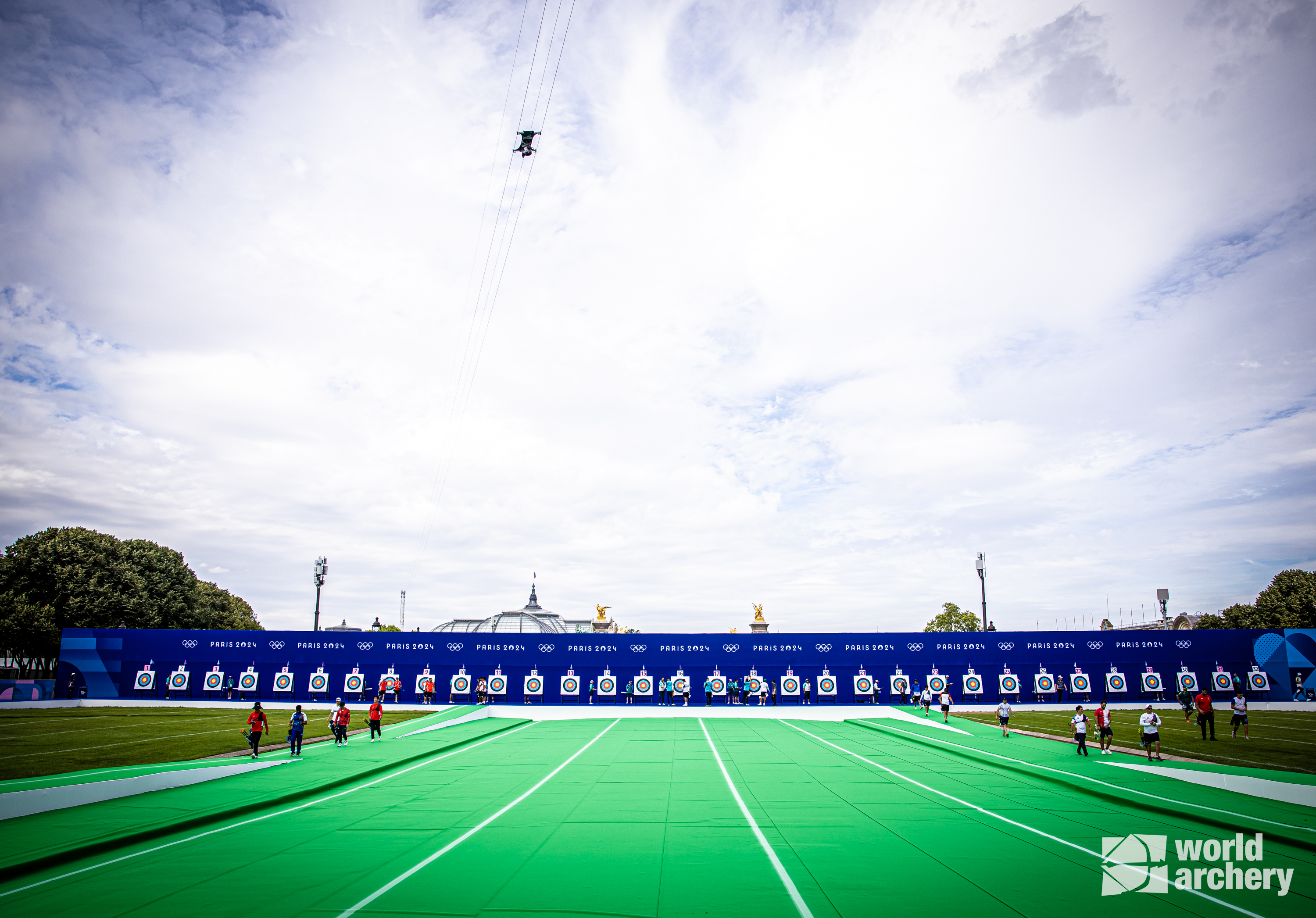
Image Source: startarchery.co.uk
The Standard Olympic Archery Distance: 70 Meters
The official archery distance for Olympic archery, governed by World Archery (formerly FITA), is consistently 70 meters. This standard archery distance has been a staple of Olympic competition for many years, providing a consistent and challenging test for archers.
Why 70 Meters? The Reasoning Behind the Distance
While the exact origins are somewhat debated, the 70-meter distance is thought to be a compromise between providing a challenging long-range shot and ensuring a reasonable level of accuracy for skilled archers. Factors influencing this choice include:
- Human Capabilities: 70 meters pushes the limits of human accuracy and consistency with a bow.
- Equipment Limitations: The technology of archery equipment at the time the distance was standardized played a role.
- Spectator Visibility: The archery target range is long enough to test skills, but short enough to allow spectators to follow the arrows (though binoculars or screens are often needed).
The Olympic Archery Target: Size and Details
The target used in Olympic archery isn’t just a randomly sized circle. It is carefully regulated to provide a standardized scoring system. The archery target size olympics follows strict guidelines.
Dimensions of the Olympic Target
- Total Diameter: 122 cm (approximately 48 inches).
- Scoring Rings: The target is divided into 10 concentric scoring rings.
- Ring Colors: From the outside in, the colors are white, black, blue, red, and gold.
- Scoring Values:
- White: 1 and 2 points
- Black: 3 and 4 points
- Blue: 5 and 6 points
- Red: 7 and 8 points
- Gold: 9 and 10 points
The “X” Ring
Within the gold ring is a smaller ring, often called the “inner ten” or “X” ring. While it also scores 10 points, it is used as a tie-breaker. The archer with more arrows in the “X” ring wins the tie.
Target Face Materials
The target face is usually made of paper or a similar material designed to allow easy arrow penetration and removal. These faces are replaceable, as they naturally wear down throughout the competition.
Recurve Archery: The Only Style in the Olympics
Recurve archery distance is synonymous with Olympic archery since recurve bows are the only type allowed in the Olympic Games.
Why Recurve?
The recurve bow was chosen for the Olympics because it emphasizes the archer’s skill. Recurve bows do not have mechanical aids like pulleys or cams. The archer must use strength, technique, and consistent form to succeed.
The Recurve Bow Explained
- Limbs: The limbs curve away from the archer at the tips.
- Sight: A sight helps with aiming, but it has no magnification.
- Stabilizers: Stabilizers are used to improve balance and reduce vibration.
- Clicker: Many archers use a clicker, a device that makes a sound when the archer has drawn the arrow to the correct length.
Competition Format and Scoring
Knowing how the competition is structured is key to understanding how the Olympic archery distance plays a role.
Ranking Round
Each archer shoots 72 arrows at the target archery distance of 70 meters. The total score from this round determines their ranking for the elimination rounds.
Elimination Rounds
Archers are paired based on their ranking. They compete in head-to-head matches. The matches use a set system.
Set System
In the set system, archers shoot 3 arrows per set. The archer with the highest score in a set gets 2 set points. If the set is tied, each archer gets 1 set point. The first archer to reach 6 set points wins the match.
Team Events
Team events also use the 70-meter official archery distance. Teams consist of three archers. The format is similar to the individual competition, with ranking and elimination rounds.
Factors Affecting Arrow Flight at 70 Meters
Shooting accurately at the archery competition range of 70 meters is challenging because several external factors affect the arrow’s flight.
Wind
Wind is a major factor. Even a slight breeze can push the arrow off course. Archers must learn to read the wind and adjust their aim.
Temperature
Temperature affects air density, which in turn affects arrow speed and trajectory.
Humidity
Humidity can also affect air density and arrow flight.
Archer Fatigue
Over the course of a competition, archers can become fatigued. This can affect their form and accuracy. Maintaining consistent form is crucial for achieving a high score.
Equipment Choices for 70 Meters
Choosing the right equipment is essential for success at the FITA target distance.
Bow Weight
Bow weight refers to the force required to draw the bow. Most Olympic archers use bows with a draw weight between 40 and 50 pounds.
Arrow Spine
Arrow spine refers to the stiffness of the arrow. The correct spine is important for accurate flight.
Arrow Material
Most Olympic archers use carbon fiber arrows because they are lightweight and consistent.
Sight Adjustments
Archers make fine adjustments to their sights to compensate for wind and other factors.
Training and Techniques for Olympic Archery
Mastering the target archery distance requires years of dedicated training.
Form and Consistency
Consistent form is the most important factor in archery. Archers spend countless hours practicing their stance, draw, and release.
Mental Training
Mental toughness is crucial. Archers must be able to stay focused and calm under pressure.
Physical Conditioning
Archery requires physical strength and endurance. Archers train to maintain strength and stamina throughout the competition.
Drills
Archers use a variety of drills to improve their technique. These drills focus on specific aspects of the shot, such as draw length, release, and follow-through.
Adapting to Different Weather Conditions
Archers must learn to adapt to different weather conditions.
Shooting in the Wind
Shooting in the wind requires archers to adjust their aim. They may need to aim to the left or right of the target to compensate for the wind.
Shooting in the Rain
Shooting in the rain can be challenging. Archers must keep their equipment dry and maintain their grip on the bow.
Shooting in Cold Weather
Shooting in cold weather can cause muscles to stiffen. Archers must warm up thoroughly before competing.
The Future of Olympic Archery
The Olympic archery distance is a fundamental part of the sport, and its role will continue to be significant.
Potential Changes
While unlikely, there could be adjustments to the competition format or equipment rules in the future. However, the 70-meter distance is likely to remain the standard.
Technology
Advancements in archery technology will continue to improve accuracy and performance.
Global Participation
Archery is growing in popularity around the world, leading to increased competition at the Olympic level.
Grasping the Impact of the Distance
The 70-meter official archery distance is a key element of Olympic archery. It tests the archer’s skill, strength, and mental toughness. It also requires careful attention to equipment choices and environmental conditions.
Table: Key Dimensions in Olympic Archery
| Dimension | Measurement |
|---|---|
| Archery Target Range | 70 meters |
| Total Target Diameter | 122 cm (48 inches) |
| 10-Ring Diameter | 12.2 cm (4.8 inches) |
| X-Ring Diameter (Tie Breaker) | 6.1 cm (2.4 inches) |
FAQ: Common Questions About Olympic Archery Distance
What is the distance of the target in Olympic archery?
The distance is 70 meters.
Can I practice at different distances?
Yes, archers often practice at various distances to improve their skills, but the archery competition range for Olympic-style archery is always 70 meters.
What is FITA target distance?
Before it was known as World Archery, the sport’s international governing body was called FITA. When archers talk about the “FITA target distance,” they’re referencing the official ranges set by World Archery for competitive events, like the 70-meter mark for recurve disciplines.
Who is responsible for setting the archery target range?
World Archery sets the official archery distance and other rules for Olympic archery.
How does the wind affect archery target range?
Wind can significantly impact the trajectory of arrows, especially at 70 meters. Archers must adjust their aim to compensate for wind drift.
What is the archery target size olympics use?
The archery target size olympics use has a diameter of 122 cm. It is divided into ten scoring zones.
What are olympic archery target dimensions?
The olympic archery target dimensions are 122 cm in total diameter, with each color zone having a specific width and the center “X” ring used for tie-breakers.
Is the official archery distance always 70 meters?
Yes, the official archery distance in Olympic recurve archery is consistently 70 meters.
Does the archery competition range differ for other types of archery?
Yes, other types of archery, such as compound archery, may have different target distances.
What is considered the standard archery distance outside of the Olympics?
The standard archery distance can vary depending on the specific archery discipline. However, 70 meters is standard for recurve target archery.

Hi, I’m Robert Contreras, a passionate archery instructor based in the USA. With years of experience under my belt, I’ve dedicated my life to mastering the art of archery and sharing its intricacies with enthusiasts of all levels. Through my website, 10Bows.com, I invite you to explore a treasure trove of tips, techniques, and personal insights that reflect my journey in the world of archery. Whether you’re picking up a bow for the first time or refining your skills, I’m here to help guide you toward precision, focus, and a deeper appreciation for this timeless sport.