What is Archery? Archery is the sport, practice, or skill of propelling arrows from a bow to hit a target. This guide offers an introduction to archery for beginners, including choosing equipment, safety tips, and training resources to get you started.
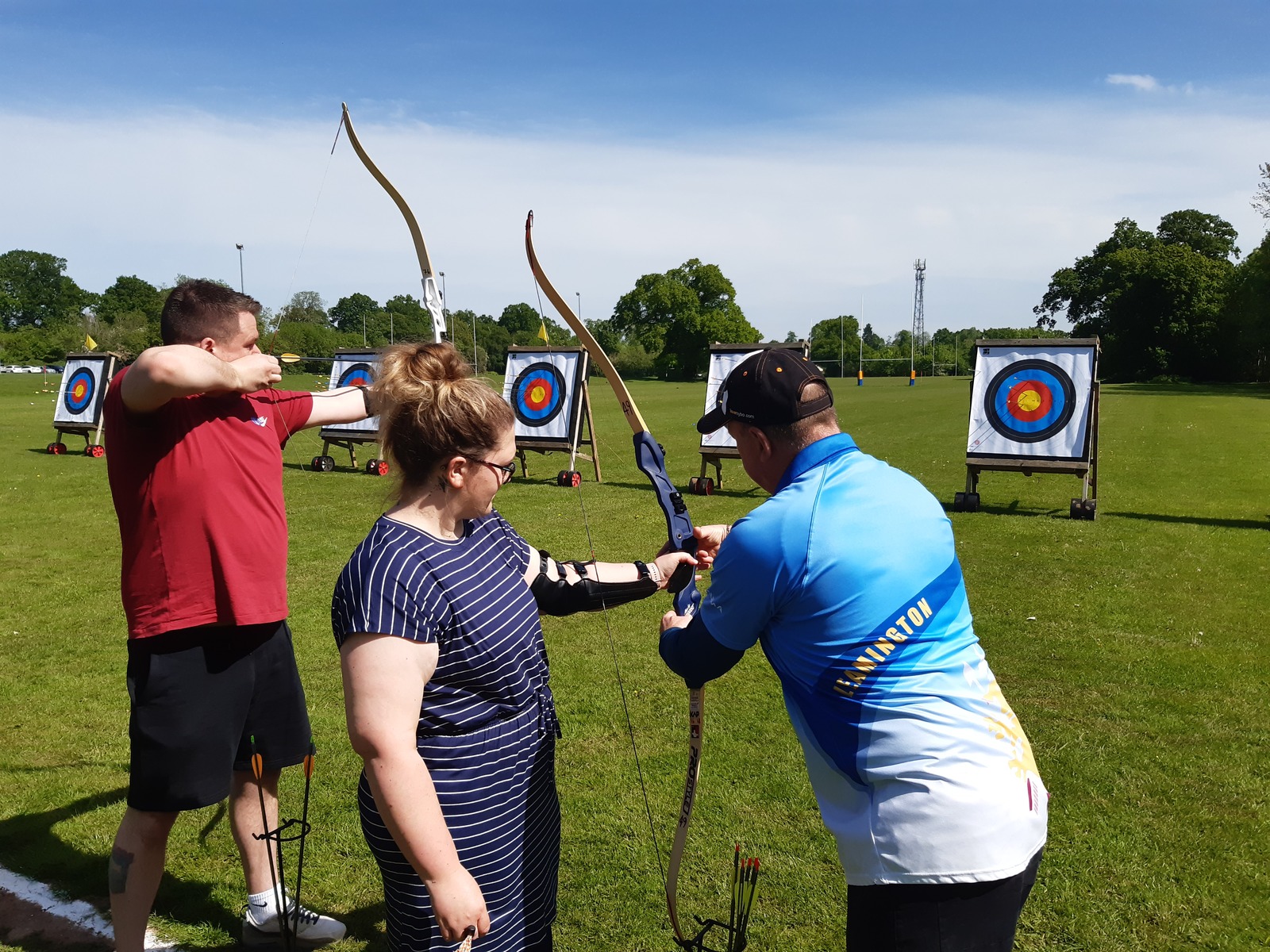
Image Source: archerygb.org
Why Choose Archery?
Archery isn’t just a sport; it’s an engaging activity that offers several benefits:
- Focus and Concentration: Archery requires intense focus, helping improve concentration and mental discipline.
- Physical Fitness: Drawing a bow works muscles in your arms, shoulders, back, and core.
- Stress Relief: The repetitive nature of archery can be meditative and relaxing.
- Accessibility: Archery is suitable for people of all ages and fitness levels.
- Community: Joining an archery club connects you with like-minded individuals.
Archery Basics: Essential Terminology
Before diving into equipment and techniques, familiarize yourself with these basic archery terms:
- Bow: The instrument used to propel arrows.
- Arrow: The projectile shot from the bow.
- Target: The object aimed at.
- Nock: The notch at the rear of the arrow that fits onto the bowstring.
- Fletching: The feathers or vanes on an arrow that stabilize its flight.
- Draw Weight: The force required to pull the bowstring back to a specific distance.
- Draw Length: The distance you pull the bowstring back.
- Anchor Point: The consistent spot on your face where you draw the bowstring.
- Release: Letting go of the bowstring to propel the arrow.
- Quiver: A container for holding arrows.
Types of Bows: Finding the Right Fit
Choosing the right bow is a vital step in learning archery. Several types of bows exist, each with unique characteristics:
Recurve Bows: A Classic Choice
A recurve bow for beginners is an excellent choice because they are simple to learn and can be used in various archery styles.
- Description: The limbs curve away from the archer when unstrung.
- Advantages: Lightweight, simple design, easy to maintain, suitable for target archery and traditional archery.
- Disadvantages: Requires more skill and practice to master than compound bows.
Compound Bows: Modern Technology
- Description: Uses a system of pulleys and cams to reduce the draw weight at full draw (let-off).
- Advantages: More accurate at longer distances, requires less strength to hold at full draw.
- Disadvantages: More complex mechanism, heavier, more expensive.
Longbows: Traditional Archery
- Description: A tall, straight bow made from a single piece of wood.
- Advantages: Traditional and historical appeal, simple design.
- Disadvantages: Requires considerable strength and skill, less accurate than recurve or compound bows for beginners.
Bow Comparison Table
| Feature | Recurve Bow | Compound Bow | Longbow |
|---|---|---|---|
| Complexity | Simple | Complex | Simple |
| Accuracy | Moderate | High | Low |
| Draw Weight | Increases steadily | Decreases at full draw | Increases steadily |
| Maintenance | Low | Moderate | Low |
| Cost | Moderate | High | Moderate |
| Best For | Archery for beginners, target archery, traditional archery | Hunting, 3D archery, target archery | Traditional archery, historical re-enactment |
Archery Equipment Guide: What You Need
Besides the bow, several other pieces of archery equipment guide are essential for archery.
- Arrows: Choose arrows that match your bow’s draw weight and your draw length. Aluminum or carbon arrows are common choices.
- Armguard: Protects your forearm from the bowstring.
- Finger Tab or Glove: Protects your fingers from the bowstring.
- Target: A safe and appropriate target designed to stop arrows without damaging them.
- Quiver: Holds your arrows for easy access.
- Bow Stringer: A tool for safely stringing and unstringing a recurve or longbow.
- Arrow Rest: Supports the arrow on the bow.
- Sight (Optional): Aids in aiming, particularly useful for target archery.
- Archery Range finder: This device is essential in open spaces for measuring distance from the shooter to the target.
Target Archery Setup: Creating a Safe and Effective Range
Setting up a target archery setup is crucial for safety and effective practice.
- Choose a Safe Location: Select a spacious area with a clear background, free from obstacles and people. Ensure you have a safe backstop.
- Set Up Your Target: Place your target against a suitable backstop, such as a large target block or netting.
- Establish a Shooting Line: Mark a clear shooting line at a safe distance from the target. Beginners should start at a closer distance (e.g., 10-15 yards) and gradually increase it as their skills improve.
- Safety Zone: Define a safety zone around the target and shooting line to prevent accidental entry.
Recommended Target Distances
| Skill Level | Distance (Yards) |
|---|---|
| Beginner | 10-15 |
| Intermediate | 20-30 |
| Advanced | 40+ |
Archery Safety Tips: Prioritizing Safety
Archery safety tips are paramount when practicing archery.
- Never dry-fire a bow: Dry-firing (releasing the bowstring without an arrow) can damage the bow and cause injury.
- Always aim at a target: Never point a bow at anything you don’t intend to shoot.
- Inspect equipment regularly: Check your bow, arrows, and other equipment for damage before each use.
- Use proper form: Incorrect form can lead to injury. Seek guidance from a qualified instructor.
- Be aware of your surroundings: Ensure the area is clear of people and obstacles before shooting.
- Wear appropriate safety gear: Use an armguard and finger protection.
- Retrieve arrows safely: Walk to the target, keeping arrows pointed down and away from yourself and others.
Archery Training: Developing Your Skills
Consistent archery training is vital for improving your skills and accuracy.
Basic Stance and Form
- Stance: Stand perpendicular to the target with your feet shoulder-width apart.
- Nocking: Attach the arrow to the bowstring.
- Grip: Hold the bow loosely with your non-dominant hand.
- Draw: Pull the bowstring back smoothly and steadily towards your anchor point.
- Anchor: Establish a consistent anchor point on your face.
- Aim: Focus on the target.
- Release: Release the bowstring smoothly, allowing your fingers to relax.
- Follow Through: Maintain your form after the release.
Drills for Accuracy
- Blank Bale Shooting: Practice shooting at a blank target at close range to focus on form and release.
- Grouping Drills: Aim at a specific spot on the target and try to group your arrows as closely as possible.
- Distance Training: Gradually increase the distance to the target as your accuracy improves.
Tips for consistent practice
- Start slow: Focus on form over power.
- Stay balanced: Balance can help with accuracy and fatigue.
- Don’t give up: Stick with it and don’t give up.
Archery Lessons Near Me: Seeking Professional Guidance
Consider taking archery lessons near me from a certified instructor. A qualified instructor can provide personalized guidance on form, technique, and safety.
Finding a Certified Instructor
- Archery Clubs: Many archery clubs offer lessons and training programs.
- Archery Ranges: Some archery ranges have instructors on staff.
- USA Archery: The national governing body for archery in the United States offers instructor certification programs.
What to Expect in a Lesson
- Safety briefing: Your instructor will review safety rules and procedures.
- Equipment introduction: You’ll learn about the different types of archery equipment.
- Basic form instruction: Your instructor will teach you the proper stance, grip, draw, anchor, and release.
- Practice shooting: You’ll have the opportunity to practice shooting at a target under the guidance of your instructor.
- Feedback and correction: Your instructor will provide feedback on your form and technique and offer corrections.
Choosing the Right Recurve Bow for Beginners
A good recurve bow for beginners is essential for making the learning process enjoyable. When selecting a recurve bow, consider the following:
- Draw Weight: Choose a draw weight that you can comfortably handle. Beginners should start with a lower draw weight (e.g., 15-25 lbs) and gradually increase it as their strength improves.
- Draw Length: Select a bow with a draw length that matches your arm span.
- Bow Length: A longer bow is generally more stable and forgiving, making it a good choice for beginners.
- Material: Recurve bows are typically made from wood, fiberglass, or composite materials. Wooden bows are more traditional, while fiberglass and composite bows are more durable and weather-resistant.
- Price: Beginner recurve bows range in price from around \$100 to \$300.
Recommended Beginner Recurve Bows
| Bow Model | Draw Weight (lbs) | Draw Length (inches) | Material | Price (approx.) |
|---|---|---|---|---|
| Samick Sage | 25-60 | Up to 29 | Maple/Fiberglass | \$150-200 |
| PSE Razorback | 20-50 | Up to 30 | Maple/Fiberglass | \$120-170 |
| Southwest Spyder | 20-60 | Up to 29 | Maple/Fiberglass | \$130-180 |
Deciphering Archery Range Finder Usage
An archery range finder is a valuable tool for archers who shoot at varying distances, particularly in field archery or hunting scenarios. It accurately measures the distance between you and your target, allowing for precise adjustments to your aim.
How to Use an Archery Range Finder
- Power On: Turn on the range finder and select the appropriate mode (typically archery or hunting mode).
- Aim: Look through the viewfinder and aim the crosshairs at your target.
- Activate: Press the button to activate the laser.
- Read Distance: The range finder will display the distance to the target in yards or meters.
- Adjust Aim: Use the distance information to adjust your aim point accordingly.
Benefits of Using a Range Finder
- Improved Accuracy: Provides precise distance measurements for more accurate shots.
- Reduced Guesswork: Eliminates the need to estimate distances, reducing the risk of misjudging your shot.
- Enhanced Confidence: Increases confidence in your shots, leading to better overall performance.
FAQ Section
Q: What is the best type of bow for beginners?
A: A recurve bow is generally considered the best type of bow for beginners due to its simplicity, ease of use, and versatility.
Q: Can I practice archery in my backyard?
A: It depends on local regulations and the size of your backyard. Ensure you have a safe backstop and follow all safety precautions. It’s recommended to check with your local authorities regarding any restrictions or permits required for backyard archery.
Q: Who is USA Archery?
A: USA Archery is the national governing body for archery in the United States. It promotes the sport of archery, organizes competitions, and provides resources for archers of all levels.
Q: How often should I practice archery?
A: The frequency of your archery practice depends on your goals and availability. Aim for at least 2-3 sessions per week to develop your skills and maintain consistency.
Q: What if I am left-handed?
A: Archery equipment is available for both right-handed and left-handed archers. When purchasing a bow, be sure to select one that is designed for your dominant hand. Most ranges will have these available.

Hi, I’m Robert Contreras, a passionate archery instructor based in the USA. With years of experience under my belt, I’ve dedicated my life to mastering the art of archery and sharing its intricacies with enthusiasts of all levels. Through my website, 10Bows.com, I invite you to explore a treasure trove of tips, techniques, and personal insights that reflect my journey in the world of archery. Whether you’re picking up a bow for the first time or refining your skills, I’m here to help guide you toward precision, focus, and a deeper appreciation for this timeless sport.