Do you want to know how to keep score in archery? Archery scoring involves assigning points based on where your arrow hits the target. This guide will explain how to score accurately and improve your game.
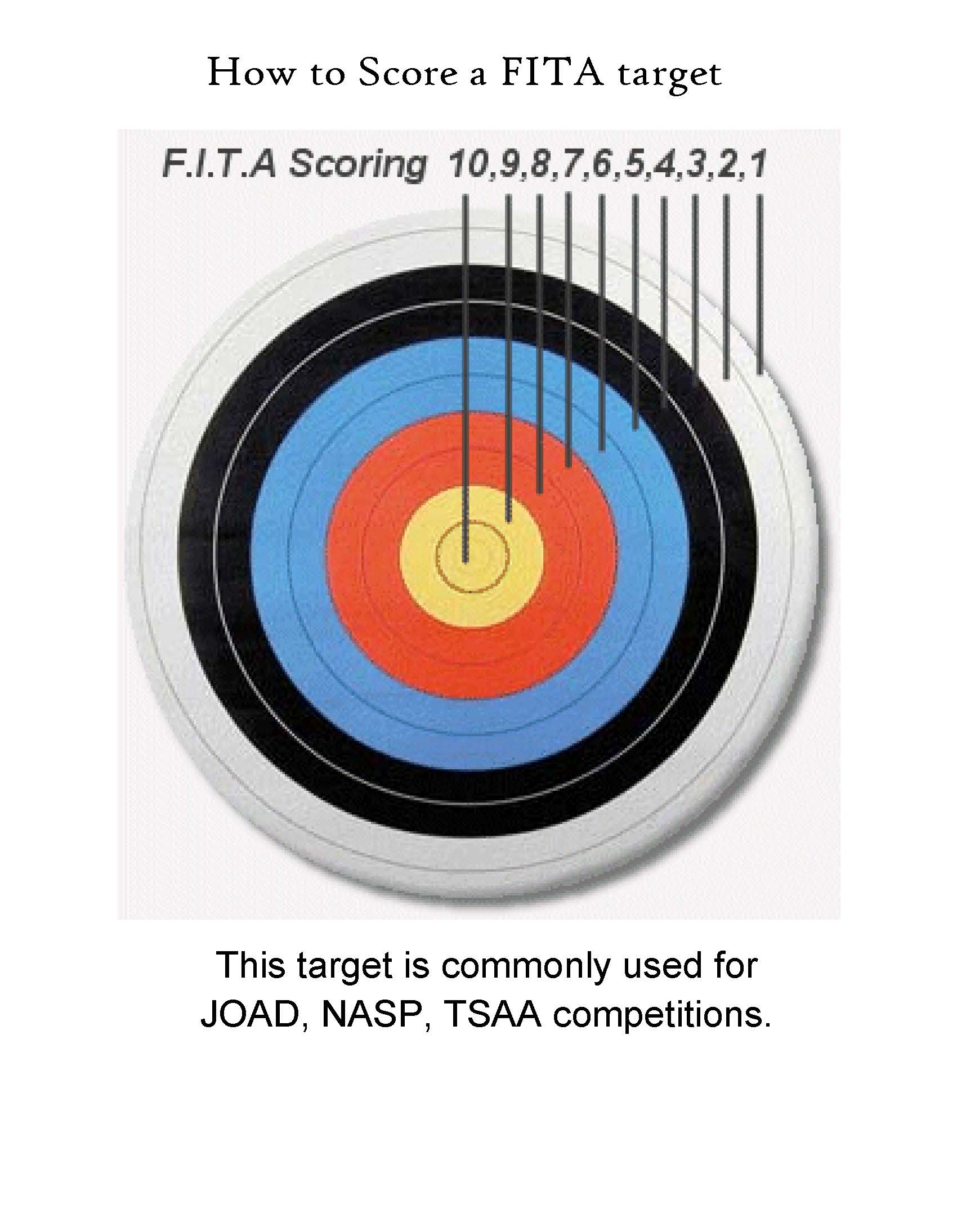
Image Source: texasarchery.info
Deciphering Archery Targets and Scoring Zones
The first step to scoring is knowing the target. Different types of archery use different targets. Each target has zones, or rings, that have different point values. Hitting the center is usually worth the most points. Hitting outside rings is worth fewer points.
Standard Outdoor Target (World Archery)
This target is often used in outdoor archery competitions. It has 10 scoring zones marked with colors.
- Gold (Inner): 10 points
- Gold (Outer): 9 points
- Red (Inner): 8 points
- Red (Outer): 7 points
- Blue (Inner): 6 points
- Blue (Outer): 5 points
- Black (Inner): 4 points
- Black (Outer): 3 points
- White (Inner): 2 points
- White (Outer): 1 point
- Miss (Outside White): 0 points
If an arrow cuts a line between two zones, you score the higher value.
Field Archery Target
Field archery involves shooting at targets of different sizes and distances. The scoring zones are different.
- Gold (Inner): 5 points
- Black (Outer): 3 points
- White (Outer): 1 point
Indoor Archery Target
Indoor targets are typically smaller. They focus on precision.
- 10 Ring (Inner Gold): 10 points (sometimes called an “X”)
- 9 Ring (Outer Gold): 9 points
- 8 Ring (Inner Red): 8 points
- 7 Ring (Outer Red): 7 points
- 6 Ring (Inner Blue): 6 points
- 5 Ring (Outer Blue): 5 points
- 4 Ring (Inner Black): 4 points
- 3 Ring (Outer Black): 3 points
- 2 Ring (Inner White): 2 points
- 1 Ring (Outer White): 1 point
The Process of Scoring an Archery Round
Here’s how scoring usually works during a round of archery:
- Shooting Ends: Archers shoot a set number of arrows (usually 3 or 6) at the target. This set is called an “end.”
- Approaching the Target: After shooting an end, archers go to the target together. Safety is key. Make sure everyone has finished shooting before approaching the target.
- Calling the Arrows: One archer calls out the score for each arrow. Another archer records the scores.
- Recording the Score: The scorekeeper writes down the points for each arrow on a scoresheet.
- Pulling the Arrows: After scoring, archers pull their arrows from the target. Be careful not to damage the target or other arrows.
- Repeat: The process repeats for each end until the round is finished.
Rules For Scoring Ambiguities
Sometimes it’s hard to tell exactly where an arrow landed. Here are some rules to help:
- Line Cutters: If an arrow cuts a line between two scoring zones, the higher score is awarded. It doesn’t matter how much of the arrow shaft is in the higher zone. If it touches the line, it counts.
- Bounced Arrows: If an arrow bounces off the target, it scores zero points. However, if the arrow leaves a mark on the target before bouncing, the mark determines the score.
- Pass-Throughs: If an arrow goes completely through the target, it is scored based on visible evidence. If there’s no evidence, the archer gets the benefit of the doubt and is awarded the highest possible score.
- Embedded Arrows: If an arrow is embedded in another arrow in the target (a “Robin Hood”), it scores the same as the arrow it’s embedded in.
- Disputes: If there’s a disagreement about a score, a judge will make the final decision.
Tools for Accurate Archery Scoring
Having the right tools can help you score more accurately and efficiently.
- Scoresheet: A scoresheet is essential for recording your scores. You can use a paper scoresheet or a digital app.
- Pen or Pencil: Use a pen or pencil to write down your scores. A pen is better in case of rain.
- Arrow Puller: An arrow puller helps you remove arrows from the target without hurting yourself or the arrows.
- Binoculars: Binoculars can help you see where your arrows landed, especially at longer distances.
- Magnifying Glass: A magnifying glass can help you see line cutters more clearly.
Tips for Improving Your Archery Technique
Scoring well in archery isn’t just about knowing the rules. It’s also about improving your archery technique. Here are some aiming tips and techniques to help you shoot more accurately:
Perfecting Your Archery Form
- Shooting Stance: Your shooting stance provides the foundation for your shot. Stand with your feet shoulder-width apart, perpendicular to the target. Keep your weight balanced.
- Grip: Hold the bow loosely in your bow hand. A tight grip can cause you to torque the bow and affect your target accuracy.
- Draw: Pull the string back smoothly to your anchor point. Your anchor point should be consistent every time.
- Anchor Point: Your anchor point is where you place your drawing hand on your face. This should be the same for every shot. This ensures consistency.
- Arrow Release: Your arrow release should be smooth and controlled. Avoid plucking or jerking the string.
- Follow Through: Maintain your archery form even after the arrow is released. This helps you stay consistent and accurate.
Enhancing Bow Stability
Bow stability is important for accurate shooting. Here are some tips:
- Use a Stabilizer: A stabilizer adds weight to the bow. This reduces vibration and increases stability.
- Proper Bow Weight: Use a bow weight that you can comfortably hold. Too heavy, and you will shake.
- Relax Your Bow Hand: Keep your bow hand relaxed. A tense hand can cause the bow to move during the shot.
Mastering Aiming
Effective aiming is key to hitting your target.
- Sight Alignment: If you use a sight, make sure it is properly aligned. Adjust the sight until your arrows are hitting the center of the target.
- Focus: Focus on the target. This will help you aim more accurately.
- Breathing: Control your breathing. Take a deep breath, exhale slowly, and release the arrow while holding your breath.
Importance of Consistent Practice
Archery practice drills are essential for improving your skills.
- Regular Practice: Practice regularly to maintain your skills. Even short practice sessions can help.
- Focus on Fundamentals: Focus on the fundamentals of archery. Good form and technique are the keys to accurate shooting.
- Vary Your Distances: Practice shooting at different distances. This will help you improve your elevation control and windage adjustments.
- Mental Training: Mental training can help you stay focused and confident during competitions.
Adjusting for Environmental Factors
Wind and elevation can affect your arrow’s trajectory.
- Windage Adjustments: If the wind is blowing, you’ll need to make windage adjustments. Aim slightly into the wind to compensate.
- Elevation Control: For longer distances, you’ll need to adjust your elevation control. Aim higher to compensate for the arrow’s drop.
Specific Scoring Scenarios
Let’s explore some specific scoring scenarios you might encounter:
- Arrow Hits the Bale (but Not the Target Face): If the arrow hits the target bale but misses the target face entirely, it scores zero points.
- Arrow Breaks Upon Impact: If an arrow breaks upon impact, you score the value of the point of impact on the target face, based on the visible mark. If no mark is visible, a judge will make a determination.
- Arrow Deflects Off Another Arrow: If an arrow deflects off another arrow already in the target, it scores where it lands. It does not inherit the score of the arrow it hit.
- Scoring in Team Events: In team events, each team member’s score is added together to determine the team’s total score. Rules about line cutters and other ambiguities apply as usual.
Digital Scoring Aids
Many apps and software programs can help with scoring:
- Archery Scorepad Apps: These apps let you record scores electronically, track progress, and analyze your shooting patterns.
- Online Scoring Platforms: Some archery organizations use online platforms for tournament scoring and rankings.
Fathoming Equipment Inspection
Before a competition, your equipment might be inspected. This is to make sure it follows the rules. Things like bow weight, arrow diameter, and sight limitations might be checked. Knowing the rules helps you avoid problems.
Tournament Etiquette
Knowing how to behave during tournaments matters.
- Safety First: Always follow safety rules. Don’t point your bow at anyone. Wait for the signal before shooting.
- Respect Other Archers: Be quiet while others are shooting. Don’t walk in front of archers.
- Be Honest: Call your scores accurately. Don’t try to cheat.
- Follow Instructions: Listen to the judges. They are there to help.
Adapting to Different Archery Styles
Scoring can vary based on the archery style:
- Target Archery: This focuses on hitting a target at known distances. Precise scoring is very important.
- Field Archery: This involves shooting at targets of different sizes and distances in a natural setting. The scoring zones are simpler.
- 3D Archery: This involves shooting at life-sized animal targets. Scoring zones are usually marked on the target.
- Clout Archery: This involves shooting arrows high into the air to land as close as possible to a flag on the ground. Scoring is based on distance from the flag.
Comprehending Common Archery Terminology
Knowing the language of archery can help you.
- End: A set number of arrows shot before scoring.
- Round: A set number of ends.
- Line Cutter: An arrow that lands on the line between two scoring zones.
- Robin Hood: An arrow that splits another arrow in the target.
- Grouping: How close your arrows are to each other.
- Tuning: Adjusting your equipment for optimal performance.
Enhancing Your Mental Game
Your mental state matters a lot in archery.
- Focus: Stay focused on the task. Don’t let distractions bother you.
- Confidence: Believe in yourself. Confidence can improve your performance.
- Visualization: Imagine yourself shooting well. This can help you stay calm and focused.
- Positive Self-Talk: Encourage yourself. Replace negative thoughts with positive ones.
- Manage Pressure: Learn to manage pressure. Don’t let the competition get to you.
Archery Practice Drills to Sharpen Your Skills
Here are some archery practice drills to hone your scoring abilities:
- Blank Bale Shooting: Practice your form and release at a blank target bale with no aiming.
- Grouping Drills: Focus on getting tight groupings of arrows.
- Timed Shooting: Practice shooting under time pressure.
- Distance Variation: Practice shooting at various distances to improve your range estimation and elevation control.
- Wind Drills: Practice shooting in windy conditions to master windage adjustments.
Frequently Asked Questions (FAQ)
- What happens if my arrow bounces off the target?
- If an arrow bounces off the target, it scores zero points unless it leaves a visible mark.
- Can I touch the target before scoring?
- No, do not touch the target before all arrows are scored.
- What if two arrows are touching each other?
- Score each arrow where it lands. If they are touching, it can be hard to tell, so take your time.
- Is it okay to ask for help with scoring?
- Yes, especially when you are learning. Ask an experienced archer or a judge for help.
- What’s the most important thing to remember when scoring?
- Be accurate and honest.
Unraveling the mysteries of archery scoring might feel like a puzzle at first, but with dedicated practice and a keen eye, you’ll soon be hitting the bullseye of understanding. Master the game by learning the ins and outs of the scoring system, finessing your shooting form, and keeping your concentration locked on target, and you’ll see your scores climb and your enjoyment of the sport reach new heights. Aim true and happy shooting!

Hi, I’m Robert Contreras, a passionate archery instructor based in the USA. With years of experience under my belt, I’ve dedicated my life to mastering the art of archery and sharing its intricacies with enthusiasts of all levels. Through my website, 10Bows.com, I invite you to explore a treasure trove of tips, techniques, and personal insights that reflect my journey in the world of archery. Whether you’re picking up a bow for the first time or refining your skills, I’m here to help guide you toward precision, focus, and a deeper appreciation for this timeless sport.